

Math Is Everywhere: 7 Low-Pressure Ways to Strengthen Your Child's Skills This Summer


While the academic calendar may create the illusion that there are periods for fun and periods for learning, the truth is this: what is taught during the school year is meant to be truly relevant to everyday life, regardless of the season. This illusion can also bring unintended consequences; learning loss over summer has a measurable, long-term impact on skill development. Quantitative skills are particularly susceptible to this loss without continued practice.

Fortunately, because these skills are fundamental to everyday life, that practice can flow seamlessly from natural experiences and the ‘fun’ already provided by summer break. Rather than rigid worksheets or kitchen-table battles, there are countless ways to weave enjoyable mathematical concepts and analytical thinking into the fabric of everyday summer routines.

CULINARY & TRAVEL

  • In the Kitchen: One of the most immediately relevant and tangible ways to integrate math into daily life is cooking. Fractions, measurements, and proportions all play a role when preparing a meal, especially when doubling or cutting a recipe. Research and select recipes together, compare weights when purchasing ingredients, and apply mathematical principles to the use of measuring tools while pulling it all together.

  • In the Car: Road trips, or even simple cross-town commutes, are also opportunities for practical problem-solving exercises.  Monitor speed limits, calculate estimated timing and contrast them with the real-world alternative calculations made by travel apps, and estimate fuel efficiency to convert passive passenger rides into active analytical adventures.

FINANCES & STATISTICS

  • In the Budget

    • Summer shopping trips and grocery runs serve as a prime example for teaching financial literacy. Building a set budget to calculate discounts, comparing unit prices, or estimating totals before the checkout counter reinforce mental math skills.

  • On the Field:

    • Sports analytics offer a highly engaging way to interpret statistical data. Track batting averages, analyze player percentages, or calculate scores during a favorite game to help shift math from a dry, disconnected academic chore into an interactive, collaborative passion.

AT HOME & ABROAD

  • Around the House:

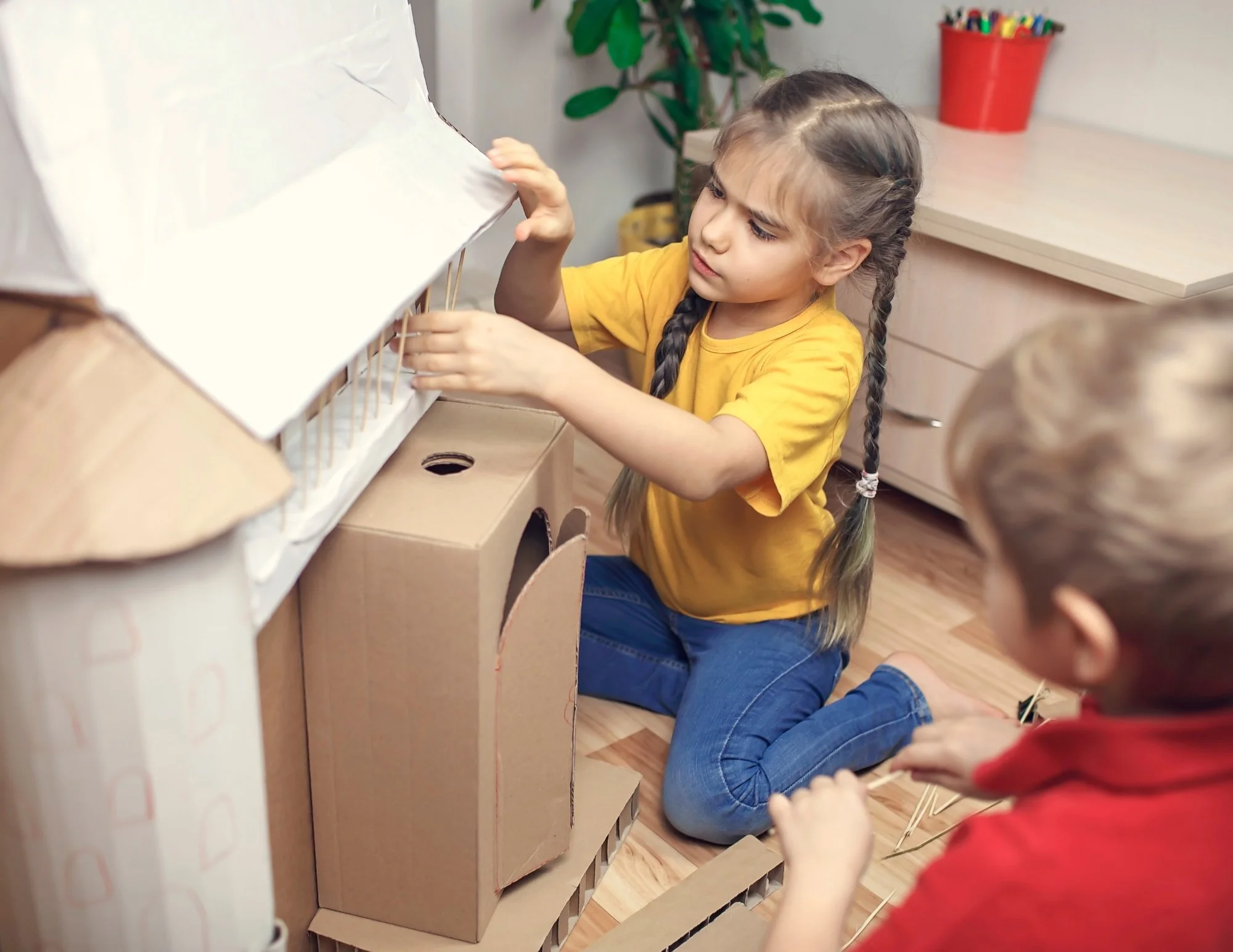
    • Backyard construction projects, bedroom rearrangements, or simple crafts require intentional planning. Calculating square footage for a garden plot or measuring dimensions for new shelving can teach children how to convert abstract principles into physical execution.

  • On the Clock & Calendar

    • Holding the responsibility of planning a summer day trip builds essential executive functioning alongside time-based logic. Ask your child to research fun adventures, map out a timeline, account for drive and meal times, and plan specific, sequential intervals for each activity.

  • While at Play:

    • There are countless strategy-driven board games and logic puzzles, as well as online resources such as interactive sites and engaging videos - that allow children to practice foundational operations, probability, and algorithmic thinking. Something as simple as a family game night can nurture deductive reasoning and strategic foresight while simultaneously strengthening family connection. If the goal is more independent and self-led math play, try a variety of apps and programs until finding what your child loves most.

Kids often question whether school is genuinely relevant to their lives, and summer provides the perfect opportunity to demonstrate that relevance while also protecting the learning gains from the prior year. With a small but strategic shift in perspective, families can highlight how low-pressure mathematical applications already exist within their normal routines and, better still, strengthen their connection by working through them together. 

Written by Brandi R.
Why Boredom Can Be Good for Kids (and What It Builds)


After the challenges and demands posed by the school year, summer break offers a much-needed opportunity to regroup. While it often provides ample space for decompression, this time period also represents a critical window for preventing learning loss and effectively preparing for success in the year to come. It can be difficult to balance these competing priorities; however, a thoughtful, holistically aligned approach can make a profound difference in accomplishing both objectives with ease. One solution is to follow an intentional trajectory: moving from recovery, to restoring foundations and confidence, and finally, developing a strong position for future growth. With each step attended to, summer can serve as a powerful bridge from one school year to the next.

RECOVERING THROUGH INTENTIONAL REST

Because the academic year is often characterized by rigid schedules and intense performance pressures, children’s nervous systems need a period of rest. Recovery, however, is not defined as simply removing schoolwork from the equation; it is the purposeful restoration of both mental and emotional energy. This first step is best supported through a consistent sleep routine and unscheduled free time in the daily schedule. As an added bonus, research on free play has shown that it comes with significant benefits beyond its recovery value, including enhanced creativity and self-efficacy, and improved core executive functioning skills, such as focus, memory, and cognitive flexibility. Given the freedom to pursue unstructured play and autonomous leisure, children are able to replenish the depleted mental ‘bank account’ and work towards the second step: rebuilding.

REBUILDING CONFIDENCE & ROUTINE

After the fatigue has faded and energy is renewed, the next step - rebuilding - arrives naturally. Stepping back into a rhythm and finding momentum doesn’t need to involve grueling academic labor. Instead, weaving low-pressure opportunities that feel like a natural part of the world  around them can reinforce their skills without provoking power struggles or tension. Reading, writing, and math skills are all integral parts of daily life, and capitalizing on this fact allows children of any age to practice them meaningfully without even realizing it. Further still, embedding them into their routines and environment (such as the ones described in this article about nurturing reading at home) can also make a big difference in overall engagement. Success in these activities fosters a sense of competency and reinforces belief in their own capabilities. Rebuilding, then, is best achieved when they can strengthen executive functions and academic skills in contexts outside of a graded curriculum, and when they see themselves as active participants in their own learning.

GROWING TOWARD FUTURE POTENTIAL

Growth is the natural culmination of what arrives after rest and rebuilding: new challenges and opportunities. When they’re ready, introducing gentle, self-led exploration promotes an expansion of their current knowledge. Driven by personal passions rather than mandated curriculum, growth is amplified; new heights in their learning become possible when it extends beyond the classroom and moves toward their imagined futures. Conversations about their interests and encouraging deeper pursuits on topics that spark curiosity transforms passive summer time into active cognitive development. Whether through research, hands-on projects, or extended discussions, these pursuits cultivate greater agency and self-efficacy that support entry into the new school year from a place of confidence and clarity. These small, deliberate shifts in the approach to summer break become a strategic investment in their long-term academic and personal success, ensuring that when they arrive back to school, they are prepared beyond school supplies: carrying a renewed love of learning and sharpened skills.

Written by: Brandi R.

From Recovery to Readiness: A Parent's Guide to a Balanced Summer Break


After the challenges and demands posed by the school year, summer break offers a much-needed opportunity to regroup. While it often provides ample space for decompression, this time period also represents a critical window for preventing learning loss and effectively preparing for success in the year to come. It can be difficult to balance these competing priorities; however, a thoughtful, holistically aligned approach can make a profound difference in accomplishing both objectives with ease. One solution is to follow an intentional trajectory: moving from recovery, to restoring foundations and confidence, and finally, developing a strong position for future growth. With each step attended to, summer can serve as a powerful bridge from one school year to the next.

RECOVERING THROUGH INTENTIONAL REST

Because the academic year is often characterized by rigid schedules and intense performance pressures, children’s nervous systems need a period of rest. Recovery, however, is not defined as simply removing schoolwork from the equation; it is the purposeful restoration of both mental and emotional energy. This first step is best supported through a consistent sleep routine and unscheduled free time in the daily schedule. As an added bonus, research on free play has shown that it comes with significant benefits beyond its recovery value, including enhanced creativity and self-efficacy, and improved core executive functioning skills, such as focus, memory, and cognitive flexibility. Given the freedom to pursue unstructured play and autonomous leisure, children are able to replenish the depleted mental ‘bank account’ and work towards the second step: rebuilding.

REBUILDING CONFIDENCE & ROUTINE

After the fatigue has faded and energy is renewed, the next step - rebuilding - arrives naturally. Stepping back into a rhythm and finding momentum doesn’t need to involve grueling academic labor. Instead, weaving low-pressure opportunities that feel like a natural part of the world  around them can reinforce their skills without provoking power struggles or tension. Reading, writing, and math skills are all integral parts of daily life, and capitalizing on this fact allows children of any age to practice them meaningfully without even realizing it. Further still, embedding them into their routines and environment (such as the ones described in this article about nurturing reading at home) can also make a big difference in overall engagement. Success in these activities fosters a sense of competency and reinforces belief in their own capabilities. Rebuilding, then, is best achieved when they can strengthen executive functions and academic skills in contexts outside of a graded curriculum, and when they see themselves as active participants in their own learning.

GROWING TOWARD FUTURE POTENTIAL

Growth is the natural culmination of what arrives after rest and rebuilding: new challenges and opportunities. When they’re ready, introducing gentle, self-led exploration promotes an expansion of their current knowledge. Driven by personal passions rather than mandated curriculum, growth is amplified; new heights in their learning become possible when it extends beyond the classroom and moves toward their imagined futures. Conversations about their interests and encouraging deeper pursuits on topics that spark curiosity transforms passive summer time into active cognitive development. Whether through research, hands-on projects, or extended discussions, these pursuits cultivate greater agency and self-efficacy that support entry into the new school year from a place of confidence and clarity. These small, deliberate shifts in the approach to summer break become a strategic investment in their long-term academic and personal success, ensuring that when they arrive back to school, they are prepared beyond school supplies: carrying a renewed love of learning and sharpened skills.

Written by Brandi R.

Summer Survival Guide: How to Create an Activities Menu for Kids with ADHD


It can be hard enough to reduce screen time for kids in general, but the often unstructured and indoor nature of summers in the Phoenix Valley can unlock a new level of difficulty for parents of children with ADHD. While getting out of the house is a great way to spend the break, it isn’t always a sustainable choice for the long haul.

For many parents, hearing comments like ‘I’m bored’ and ‘There’s nothing to do’ signals a familiar struggle: decision fatigue. This is particularly true for children with executive function disorders. Decision fatigue occurs because “ADHDers struggle to filter out irrelevant information to focus on what’s most important. The struggle can lead to a significant cognitive load as information is weighed, making even small decisions feel big” (Michael Ascher, M.D., and Lauren Ascher, J.D. M.S.T., 2024). 

ENTER: THE ACTIVITIES MENU

Feeling overwhelmed by the task of choosing what to do during the day, amplified by a reduced sense of structure in general, can be a recipe for meltdowns and conflict. Fortunately, simplifying daily decisions with an activities menu can help prevent them. Working together with your child, brainstorm as many activities as you can. Providing a guided list of non-electronic activities offers a simple resource that encourages them to get creative about how to keep themselves entertained and empowers them with the gift of both structure and choice.

CREATE CATEGORIES

Aim for a variety of activity types, such as physical movement, art, music, reading, play, etc. Movement might include dancing to music, playing hide and seek, or following guided exercise videos for children. If reading and writing are generally a challenge, these can be more exciting after a trip to the library for new material, or when writing a letter to a family member who lives far away. For playtime, they might list the toys currently in their room, such as legos, blocks, and puzzles. If encouraging your child to entertain themselves more independently is a priority, it can also be helpful to create a list of activities that can be done alone versus collaboratively, such as coloring on their own or playing a board game together. 

ON THE HUNT FOR IDEAS

Running out of ideas? Check out Peak’s article on Summer Boredom Busters. Make a research project out of it on Google to see what new ideas you can read about. An adventure together around the house might discover an old pack of bubbles from a birthday party, some cake mix that hasn’t been baked yet, or other small surprises lying around. Even a sheet in the hall closet could become ‘Build a fort’ on the activity menu. Is the list getting too long? Write the ideas on slips of paper in a jar to be pulled as needed throughout the day. Or, the menu can be spread out as separate lists for different days, to help mix things up.

TAKEAWAYS

  • Summer boredom can lead to cognitive overwhelm as children with ADHD try to decide what to do with their free time.

  • Creating an activities menu can provide a sense of structure and empowered choices, while also reducing screen time and promoting creative problem-solving.

  • Activities menus are ideally designed around non-electronic entertainment, and they incorporate variety in the types of choices provided.

Written by Brandi R.

Summer Boredom Busters


As the initial excitement of summer vacation wears off, children may be searching for ways to fill their time normally spent in school. Summer days most likely feel longer for children as they transition from spending their weekdays filled with content, routines, and tightly wound schedules at school to a looser summer schedule. And while your child may be enrolled in summer school, camps, sports, or other activities, it can be challenging to fill an entire day with engagement all summer long. So, what can you do when your child is looking for “summer fun” on a slow day or a day without pre-planned activities? Here are some boredom busters to boost your child’s excitement this summer.

Physical Activity

  • Create an obstacle course and try to beat your previous record each week!

  • Watch self-guided fitness or mindfulness videos that model how to complete exercises.

  • Find movement-based brain breaks for kids. These can easily be searched on YouTube! There are many to explore until your child finds a specific type they like.

  • Create active routines: riding bikes, taking walks, practicing sports, etc. for a specific amount of time each day.

  • Spend time doing outdoor activities: jump rope, hula hooping, jumping on the trampoline, etc.

  • Invite water play, such as running through a sprinkler, swimming at the pool, or using a Slip N’ Slide.

ways to Express Creativity

  • Create a Summer Boredom Buster ​​Bucket List and pick one task to complete each day.

  • Complete a scavenger hunt.

  • Pick up new hobbies, such as painting, drawing, dancing, jewelry making, pottery, and more! Many stores have kits you can buy for guided practice.

  • Try cooking or baking new recipes. 

  • Draw pictures using guided videos from Art for Kids Hub.

  • Explore photography with a class or on your own by taking pictures of different interests.

  • Build with legos, blocks, or other household items.

  • Run a lemonade stand.

  • Play with sidewalk chalk. 

  • Try journaling or expressive writing. Kids can set a timer for free-writing, write about nature topics, write stories in sidewalk chalk, keep a daily journal reflection, etc!

Learning opportunities

  • Explore a new language with different apps, such as Duolingo, Rosetta Stone, Gus on the Go, and more.

  • Make observations and/or hypotheses about an interesting topic. If up for the challenge, create a plan to test the hypothesis. 

  • Keep an exploration journal of new places visited, nature walks taken, or parks visited!

  • Spend time focusing on handwriting practice: always check for correct capitalization. punctuation, spelling, and complete sentences!

  • Try puzzles, strategy games, chess, educational apps, logic puzzles, etc.

  • Create and complete a reading challenge, especially with a fun, new book.

  • Make a daily routine and hang a poster in your room with the details.

  • Help plant or care for a garden.

  • Make an invention. Draw a picture, create a model, write about it, and explain how the invention can be used by others.

Summer can be the perfect time to try a new hobby, explore new ideas, or strengthen the skills your child already has. There are many ways to help empower your children this summer! Children can use this time to create daily routines of their own and feel a sense of independence. However, as you help fill your child’s summer days with engaging activities, don't forget the importance of downtime, which can be a great way to incorporate different mindfulness activities, such as drawing, journaling, or yoga!

Written by Ami Z.

Exploring the Past: Engaging Children in History Through Travel


Children are natural explorers, full of curiosity about the world. With summer in full swing, vacations and trips provide a golden opportunity to tap into their natural wonder and enlighten them about the rich history that can be discovered through travel. This blog will dive into creative and unique ways to engage children in the captivating narratives of our past, connecting their travels to a deeper understanding of history.

Plan Visits to Historical Sites

When planning your family vacations, make it a point to include visits to historical sites. These can include a wide range of locations, from museums to ancient ruins and renowned landmarks. Many historical landmarks and museums offer guided tours or activities tailored specifically for children, heightening their interest in the subject matter. To up the excitement factor, consider organizing a scavenger hunt related to the specific landmark or site. This interactive approach not only engages children, but also allows them to more actively participate in history.

Utilize Guidebooks

Prior to your trip, consider investing in guidebooks or exploring online resources that outline various places of historical significance in your chosen destination. Involve your child in the process, exploring different possibilities and discussing what interests them most. Guidebooks and websites often include an array of historical facts that can provide a valuable context to the upcoming trip, building both curiosity and anticipation.

Make History Hands-On

Enlivening history through hands-on activities can be an extraordinary way to create an immersive learning experience. Encourage your child to try historical foods, witness plays or reenactments, participate in traditional crafts, or explore the musical traditions of the region. These types of experiences will not only deepen their appreciation for history, but also foster more of a connection to the culture and people of the past.

Attend Cultural Events

Research and identify cultural events taking place during your travels. Attending these events exposes your child to many different historical perspectives through unique traditions, music, food, activities, displays, and art. By immersing themselves in shared experiences of the culture, children gain a broader understanding of the historical context in which it all unfolds.

Document Your Travels

Capture cherished memories by taking plenty of photos, videos, and jotting down favorite moments from your trip. Once you return home, involve your child in the process of creating a scrapbook, PowerPoint presentation, or video slideshow to recount their experiences. This interactive reflection reinforces their learning and allows them to showcase their newfound knowledge to family and friends.

By taking the time to emphasize history through travel, you provide your child with a deeper appreciation of those who came before us. By gaining insights into the past, they can contemplate the contributions they themselves may make in shaping the future!

Written by Laine J.