
Math Is Everywhere: 7 Low-Pressure Ways to Strengthen Your Child's Skills This Summer


While the academic calendar may create the illusion that there are periods for fun and periods for learning, the truth is this: what is taught during the school year is meant to be truly relevant to everyday life, regardless of the season. This illusion can also bring unintended consequences; learning loss over summer has a measurable, long-term impact on skill development. Quantitative skills are particularly susceptible to this loss without continued practice.

Fortunately, because these skills are fundamental to everyday life, that practice can flow seamlessly from natural experiences and the ‘fun’ already provided by summer break. Rather than rigid worksheets or kitchen-table battles, there are countless ways to weave enjoyable mathematical concepts and analytical thinking into the fabric of everyday summer routines.

CULINARY & TRAVEL

  • In the Kitchen: One of the most immediately relevant and tangible ways to integrate math into daily life is cooking. Fractions, measurements, and proportions all play a role when preparing a meal, especially when doubling or cutting a recipe. Research and select recipes together, compare weights when purchasing ingredients, and apply mathematical principles to the use of measuring tools while pulling it all together.

  • In the Car: Road trips, or even simple cross-town commutes, are also opportunities for practical problem-solving exercises.  Monitor speed limits, calculate estimated timing and contrast them with the real-world alternative calculations made by travel apps, and estimate fuel efficiency to convert passive passenger rides into active analytical adventures.

FINANCES & STATISTICS

  • In the Budget

    • Summer shopping trips and grocery runs serve as a prime example for teaching financial literacy. Building a set budget to calculate discounts, comparing unit prices, or estimating totals before the checkout counter reinforce mental math skills.

  • On the Field:

    • Sports analytics offer a highly engaging way to interpret statistical data. Track batting averages, analyze player percentages, or calculate scores during a favorite game to help shift math from a dry, disconnected academic chore into an interactive, collaborative passion.

AT HOME & ABROAD

  • Around the House:

    • Backyard construction projects, bedroom rearrangements, or simple crafts require intentional planning. Calculating square footage for a garden plot or measuring dimensions for new shelving can teach children how to convert abstract principles into physical execution.

  • On the Clock & Calendar

    • Holding the responsibility of planning a summer day trip builds essential executive functioning alongside time-based logic. Ask your child to research fun adventures, map out a timeline, account for drive and meal times, and plan specific, sequential intervals for each activity.

  • While at Play:

    • There are countless strategy-driven board games and logic puzzles, as well as online resources such as interactive sites and engaging videos - that allow children to practice foundational operations, probability, and algorithmic thinking. Something as simple as a family game night can nurture deductive reasoning and strategic foresight while simultaneously strengthening family connection. If the goal is more independent and self-led math play, try a variety of apps and programs until finding what your child loves most.

Kids often question whether school is genuinely relevant to their lives, and summer provides the perfect opportunity to demonstrate that relevance while also protecting the learning gains from the prior year. With a small but strategic shift in perspective, families can highlight how low-pressure mathematical applications already exist within their normal routines and, better still, strengthen their connection by working through them together. 

Written by Brandi R.

Start the Morning Off Right: Tips and Tricks to Create a Smooth Before-School Routine


Has your family’s morning routine become a race to get out the door? With a consistent, peaceful morning routine, you can help ensure that your kids get to school on time and that they are prepared for their day mentally, physically and emotionally. Here are some tips and tricks you can try with your kids to help them start their day off right!

Prepare the Night Before

If your mornings tend to feel rushed, try creating a ‘night before’ organization checklist to tackle some of the to-dos before the busy morning even arrives. Some items your children can accomplish the evening before include: putting their homework and belongings into their backpack, packing their lunch, filling their water bottle and picking out their outfit. Not only does this allow your children to check items off their morning list, but it also reduces the stress of having so many morning to-dos.

Let a Little Light In

Building appropriate sleep and waking habits are instrumental to your kids’ wellbeing. With a good night’s sleep and sunlight cues, your children might wake naturally without the use of an alarm clock. This synchronizes the body’s biological clock and increases immunity and mood. Since it’s not always possible to wake with the morning sun, there are also really cool electronic tools, such as Hatch, that can illuminate a mock sunrise and even play peaceful morning sounds, like chimes or birds.

Set Clear Expectations

In particular for little ones, it is beneficial to create a morning routine checklist to set clear expectations for your children. This checklist can be hung in a central area of your home, like on the refrigerator in the kitchen, and can incorporate the use of choice items, such as stickers or dry erase markers. The list should be clear and concise, yet the level of detail can vary depending on your kids’ age and degree of independence. Younger kids frequently enjoy charts with visual cues. Older kids tend to do fine with a simpler format. It generally works best not to allow the use of electronics during the block of time before school so that your kids can stay focused on the tasks at hand.

Practice What You Preach

In order for your children to learn good habits, it is imperative that you, as the parent, model the behaviors you wish to see from them. Hopping out of bed, getting dressed and brushing your hair and teeth are behaviors your kids will expect to see from you before they follow suit. Sitting down for a balanced breakfast, whether it be a quick protein smoothie or a more elaborate oatmeal bar, is another important routine to have as a family. Kids look to their parents as role models, even when it comes to building their morning time management skills.

Use Fun Weekly Rewards

Offering your kids a weekly reward for leaving for school on time five days in a row might be just the extrinsic motivation your kids need while they are developing their good habits. Providing them the opportunity to earn a Friday afternoon hot cocoa or ice cream treat is a great way to increase their buy-in. You can keep a simple sticker chart in your vehicle for tracking and motivation purposes!

Written by Krista G.

Simple and Fun Ways to Incorporate Math Skills during Summer Vacation


Taking two months off from essential math and computation skills can be worrisome for many parents of little ones. After all, many math skills build upon each other and require year round practice to not fall behind or forget important facts. Luckily, there are many fun and unique ways to incorporate math skills into summer break and help your child reinforce the skills they have been working on all year long in school.

Acknowledge and Work on Math in Real World Situations

One of the simplest ways to use math during the summer is to point out all of the times in everyday life that we use math skills, perhaps without even realizing it! If your child is working on ratios, fractions or division, invite them to make a recipe with you from start to finish. Going through a recipe together is a great way to strengthen understanding of all of those skills. Another example might be having your child start to notice how much items cost at places like restaurants or grocery stores and use basic computation skills to tally up totals or how much change they might need. Lastly, try giving a back-to-school shopping allowance to your child and tell them they need to buy a certain number of items with the set amount of money you gave them. This activity is fun and puts real world problem solving and computation skills to work!

Make it an Experience

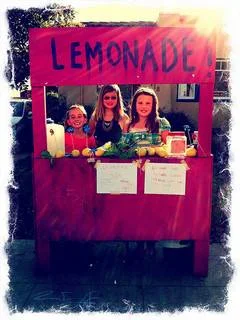
Another way to use math in summer is to come up with experiences that rely heavily on certain math skills. Things like garage sales, lemonade stands or bake sales are perfect examples! Children can calculate how much they need to spend to buy the items for the sale, how much they’re going to charge for each item and (depending on their age) can even start working on concepts like how much profit they are making.

Keeping Score

Family game night is another scenario where math skills can be reinforced. Games like Sudoku, Set, Monopoly, Connect 4 and many more help with math computation skills as well as problem solving skills. There are also endless card games that can be used to work with math concepts.

Apps and Games for Basic Reinforcement

Finally, to make sure your child does not lose their math facts, try to find a fun app or game that can be used to do a daily 10-15 minutes of math facts practice every day!

Written by Laine J.

Summer Fun to Boost Executive Functioning Skills

Executive functioning skills are the “soft skills” that are seldom explicitly taught to children; however, they are essential to completion of tasks and demonstration of knowledge. They are also essential to successful social interactions and daily living.

The summer, when we spend more time with our kids and engage in novel and interesting activities, is the perfect time to encourage the development of executive functioning skills. Family activities, social situations, and games can all be orchestrated to foster skills like self-monitoring, response inhibition, working memory, task initiation, and planning and prioritizing.

Harvard’s Center on the Developing Child recommends role playing, imaginary play, and storytelling to develop executive skills in pre-school-aged children. Learning to take turns and mimicking mature tasks help children get ready to meet the social and attentional demands of kindergarten. Singing songs that repeat and add, change, or delete words, like B-I-N-G-O and Wheels on the Bus, help develop working memory. Matching and sorting activities, increasingly challenging puzzles, and cooking encourage working memory, planning, and sustained attention. 

Reading and visits to the library are perfect for those hot summer days by the pool or enjoying the cool of indoor. Ellen Galinsky and her colleagues at Mind in the Making have created lists of books and accompanying tip sheets that promote focus and self-control, perspective-taking, communicating, making connections, critical thinking, taking on challenges, and self-directed engaged learning. The book lists include selections for children age birth through 12 years.

Games of all sorts, and designed for all ages, can promote various executive skills while increasing family time and decreasing screen time. Word and language games, such as Fannee Doolee, are especially adaptable to travel and situations that require waiting. The professionals at Understood provide us with 7 Tips for Building Flexible Thinking, which includes directions for this clever game.

Another list of activities for kids and teenagers can be found at Left Brain Buddha. Games like Simon Says require response inhibition and attention, while card games like Uno require working memory and attention. To engage and entertain teenagers, try games like Taboo and Apples to Apples that require complex thinking and impulse control.

Harvard’s Center on the Developing Child and Left Brain Buddha agree that games of strategy, like Risk, are especially valuable in developing planning, prioritizing, and other executive skills. Michelle and Kira at Sunshine and Hurricanes have created a list of the best board games for teenagers, actually chosen by teenagers.

So, whether your family is traveling around the world; playing word games and I Spy in the car or at the airport; planning a staycation that includes trips to the library and playing board games together; or maintaining the status quo with daily meal preparation, playdates, and sleepovers, there are always ways to incorporate executive skills development into the summer months. Your kids will be better prepared for the social and academic demands of school in the fall, and they might discover a new pastime in the process!   

Written by: Kerrilee W.

Resources:

Center on the Developing Child at Harvard University (2014). Enhancing and Practicing Executive Function Skills with Children from Infancy to Adolescence. Retrieved from www.developingchild.harvard.edu.

Mind in the Making website: www.mindinthemaking.org  

Understood.org: https://www.understood.org/en

Left Brain Buddha: the modern mindful life: http://leftbrainbuddha.com/

Sunshine and Hurricanes: smart parenting with purpose: https://www.sunshineandhurricanes.com/

Oxford University Press: Social Cognitive and Affective Neuroscience: https://academic.oup.com/scan

Attention Deficit Disorder Association: https://add.org/

Random Acts of Kindness Week

Random Acts of Kindness Week

Mark your calendars!  Random Act of Kindness Week is fast approaching—February 12th-18th, to be exact.  The significance of the week is simple: to make the world a better place by brightening the days of others.  (Who can’t get behind that?!) 

MATH IS ALL AROUND US: RESOURCES FOR REAL-LIFE MATH APPLICATIONS

MATH IS ALL AROUND US: RESOURCES FOR REAL-LIFE MATH APPLICATIONS

During my time as a middle school math educator, you would not believe the number of times I was asked, “Why do I have to learn this? How is it going to help me in life?” Not that I could turn every math lesson into a life lesson, but these questions reminded me that math is all around us and that the more I can engage students in real-life situations, the more they will enjoy in the learning process and remember the concepts.

TEACHING KIDS TO LOVE SCIENCE

TEACHING KIDS TO LOVE SCIENCE

I am a scientist and have spent the better part of my adult life working in a laboratory. When people ask about what that actually means, I usually tell them it’s probably what you imagine—white lab coats, strong smells, things that bubble and change color on the bench top, little cells moving around under a microscope.