
Metacognition

The Homework Fix: How to Create Study Habits That Match Your Child’s Learning Style


Long-term academic and professional success relies on so much more than what students actually know: their ability to effectively process and manage information is critical to their success in any context. When it comes to improving this ability, it is helpful to move beyond generalized strategies to habits that are intentionally aligned with learners’ unique learning style and aptitudes. Homework, projects, and test preparation can be particularly overwhelming when students lack effective study skills or use methods that don’t align with how they learn (ie. a kinesthetic learner sitting still for hours of review without hands-on engagement or motion). A tailored approach to building these skills can transform nightly homework struggles into a manageable routine, while also significantly boosting both competence and confidence.

STRATEGY #1: THE VISUAL LEARNER 

Visual learners understand and retain information best when they can see and interpret information spatially. Study methods that emphasize color, graphics, images, and visual organization - while helpful to many types of learners - are particularly effective for students with this learning style. 

  • Mind Maps and Graphic Organizers: Instead of using traditional or chronological note-taking methods, mind maps and graphic organizers can help students visually conceptualize the connections that exist between main ideas and supporting details. Using different colors for different topics can further enhance memory retrieval.

  • Highlighting and Labeling: Students can strategically highlight and annotate the material, with an emphasis on written commentary and colored labels. However, highlighting is best reserved for essential terms and phrases to avoid visual overwhelm and a loss of clarity regarding what is truly important. Pictures or symbols can play a critical role in enhancing the lasting effects of any type of review. For instance, vocabulary terms and the names of key people or places can be correlated to related images to make these concepts less abstract and more experiential. 

  • Visual Timelines: For sequencing tasks, creating a visual timeline on a whiteboard, digital platform, or large paper allows students to see the progression of events, making complex historical or literary narratives easier to comprehend and retain. It can also be helpful to emphasize the relationships between events. For example, students might examine how and why events unfolded the way they did, and explore how preceding events may have influenced later ones. 

STRATEGY #2: THE AUDITORY LEARNER 

Auditory learners excel when they can hear and discuss information. Their ideal study environment should prioritize sound, rhythm, and verbal repetition.

  • Verbalization and Recitation: Instead of reading in silence, students can read notes aloud or share the material with a friend or family member. The act of speaking the information reinforces learning more meaningfully than rote, internal repetition. Further still, making a nightly practice of talking about what they are learning during dinner can strengthen family relationships while also supporting their ability to recall and explain new material.

  • Recording and Listening: Recorded lectures or notes that students can then listen to multiple times can help solidify memory. Students can also create audio summaries of textbook chapters and listen to them during travel or exercise.

  • Group Discussion: In addition to the many benefits that are natural to collaborative learning, structured study sessions where concepts are debated or explained from diverse perspectives can offer valuable auditory input and strengthen understanding through dialogue.

STRATEGY #3: THE KINESTHETIC LEARNER 

Kinesthetic (tactile) learners learn best when they are actively doing, moving, and interacting physically with new material. Effective strategies should find creative ways to incorporate motion and hands-on activities.

  • Role-Playing and Movement: To study vocabulary or characters, flashcards can be correlated with an action (ie. jump for an adverb or clap for a verb). Focus and retention can also be improved by moving around while reciting facts, listening to an audio of the content/text, role playing key moments, or working through challenging problems on a walk. 

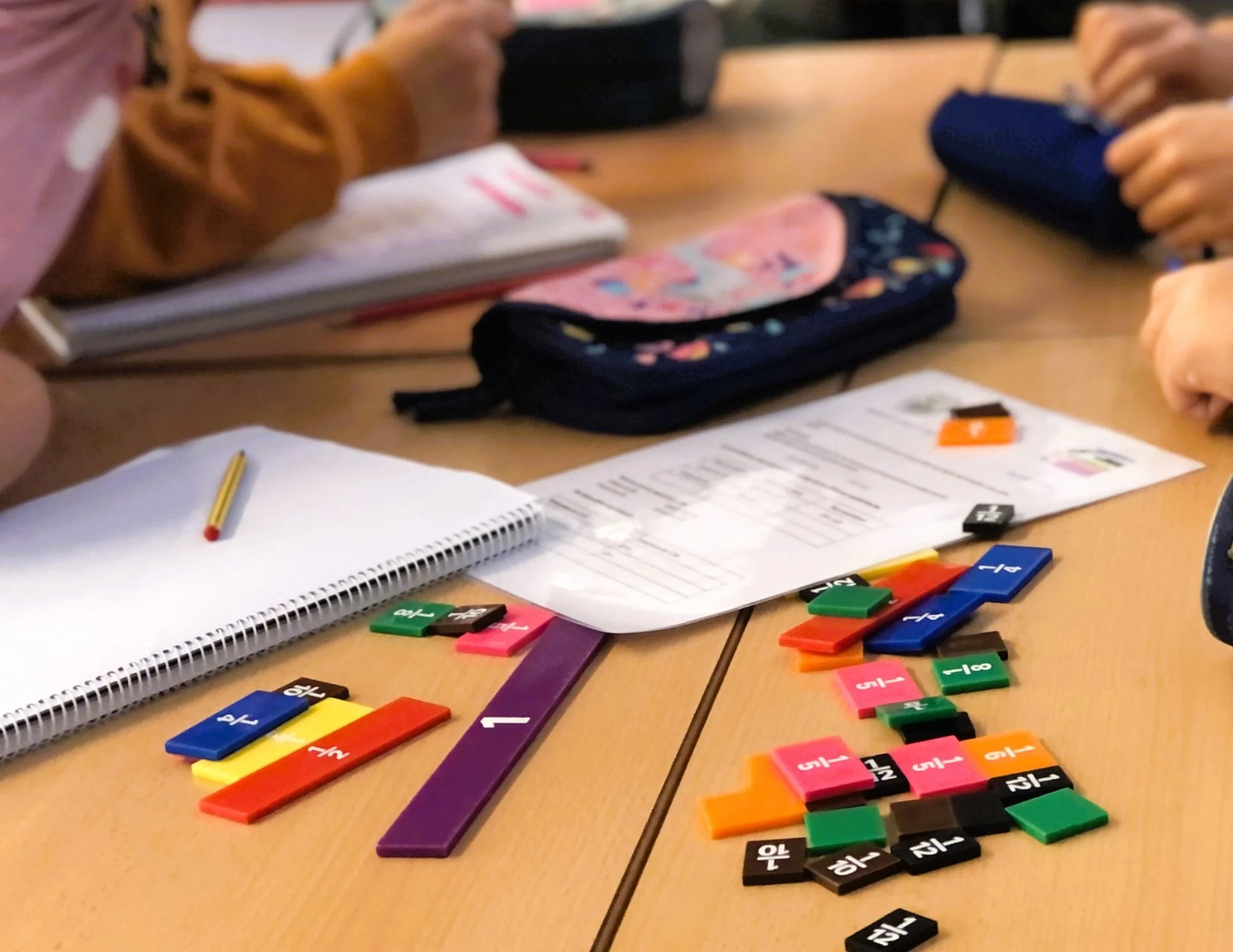
  • Manipulatives and Experimentation: For nearly any subject, using physical objects (aka manipulatives) to represent concepts transforms abstract ideas into tangible experiences. For instance, students might use blocks for algebra, build models for anatomy, or create paper cutouts for grammatical elements that can be rearranged to help illustrate the relationship between clauses, phrases, and different types of punctuation. 

Personalizing how young learners approach their study skills empowers them to shift their focus away from simply completing homework to truly mastering the material through habits designed for their unique journey to success. When they reflect on their natural learning style and take action to implement strategies tailored to that, they strengthen and enhance their self-awareness, metacognitive thinking processes, and academic resilience - all essential components for lifelong learning.

Written by Brandi R.

Celebrating Growth: 6 Ways to Honor Your Child's School Year Achievements


As the school year comes to a close, this moment offers a powerful opportunity to pause and look back at how much hard work and growth have taken place. Parents play a critical role in supporting each child's unique journey, and celebrating their wins along the way is crucial. This type of celebration positively reinforces their efforts, strengthens your bond, and nurtures core executive functioning skills like metacognition and goal monitoring.

Taking the time to truly celebrate tells your child that their progress was not just noticed, but significant enough to deserve your focused time and attention. Verbal praise is a tricky phenomenon with mixed results on children’s motivation and performance. Cognitive psychology suggests that praise should be centered around progress and process, not results, so this moment of recognition will ideally go far beyond grades and focus on the incredible progress they've made in their learning and development.

Check out these six fun and meaningful ways you can honor your child's accomplishments:

1. GROWTH CHART CELEBRATION

Remember those height charts? Create a "Growth Chart" for the school year! First, work together to brainstorm all the areas your child has grown in. Maybe it's the organization of their now-clean backpack, proactive planning for long-term projects, increased confidence in asking questions and self-advocating, or even mastering a tricky math concept they were struggling with. Write all of their achievements on bright, colorful sticky notes and place them along a vertical line. The visual representation of their progress will be a powerful reminder of just how far they’ve come.

2. “EVIDENCE OF SUCCESS” SCAVENGER HUNT

Turn celebrating into a game! Ask your child to create a scavenger hunt where each clue relates to an area of progress or reflects a skill they've developed. For example, a clue might be: "I used to be disorganized and confusing. Now, I’m all clean and following a clear system!" (Answer: Their folder and/or notebook(s), highlighting their organizational skills). Other examples may be happy memories in their yearbook, grade reports, specific assignments, etc.

3. “2024-2025 HIGHLIGHTS” CREATIVE PROJECT

Creativity plays a key role in boosting learning and children’s well-being, so a self-led project can encourage your child to express their wins in their own unique way. Ask your child to create something that represents what they feel most proud of from the past year, such as a scrapbook, a short video, a drawing, or even a song.

4. “PROUD MOMENTS” FAMILY DINNER

Plan a special family dinner where everyone shares one or two moments from the school year they are particularly proud of – either for themselves or for another family member. This fosters a supportive environment and highlights the collective effort.

5. THEN-AND-NOW VISION BOARD

This moment doesn’t have to be frozen in time; celebrate the past by recognizing its place on the way towards the future! Create a then-and-now vision board together, capturing the beautiful highlights of the past year alongside their goals for the summer or even the next school year. This subtly reinforces goal-setting, encourages self-monitoring of those goals, and keeps that growth mindset alive.

6. REFLECTIVE JOURNALING

As a family, spend some quiet time together reflecting on the year. Use prompts like: "What are you most proud of learning this year?" "What was a challenge you overcame?" "What skills do you feel you've gotten better at?" This encourages self-reflection and deeper understanding of their progress. (See this Peak blog for more on journaling.)

Ultimately, celebrating wins should go beyond a quick “good job” and a pat on the back. This moment can be a shared adventure in acknowledging effort, recognizing growth, and strengthening your connection as a family. Positive reinforcement has the greatest impact on encouraging desirable behaviors, and when celebrating students’ progress, it helps build resilient, self-aware individuals. Plus, taking ownership of their achievements does so much more for building confidence than verbal praise or validation. So, make these end-of-year celebrations fun, creative, and truly meaningful!

Written by Brandi R.

How to Self-Monitor the Progress of Your Goals


Setting goals increases motivation and helps children develop a sense of self. Children who practice reflection are more likely to self-monitor and adjust, increasing their potential to meet their objectives. Self-monitoring techniques combine reflection, mindfulness, and strategy, allowing students to analyze their progress toward a specific goal and plan their next steps.

Self-monitoring can be a multi-step process, which may cause children to feel overwhelmed or stuck. But with the right tools and guidance, children can learn to self-monitor on their own!

Create a Goal

An attainable goal is the foundation of self-monitoring. Without a goal, children have nothing to evaluate, compare, or monitor. This goal could focus on executive functions like organization, academic skills, or behavior-based objectives.

Define Mastery

How will your child know they’ve mastered this goal? What should they know, and what should they be able to do independently? What does success look like—and sound like?

For example, if a student’s goal is “to keep their room clean,” how often does it need to happen for mastery to be achieved? What exactly does a “clean room” mean? Adding specific, measurable details can help avoid vague expectations. For example: “I can keep my room clean 6 out of 7 days each week.”

Break It Down

Break the goal into smaller steps or chunks. Ask questions like:

  • “What skills do you need to reach your goal?”

  • “How do you complete this process?”

  • “What needs to happen first, next, and last?”

For example, writing CVC words includes multiple skills: letter formation, segmenting words, letter-sound correspondence, and understanding vowels and consonants. Breaking the goal into smaller pieces helps students see where they are in the process of meeting their objective.

Monitor Goals

Once children have created a goal, defined mastery, and broken it down into steps, they’re ready to start self-monitoring. Try a combination of these strategies to see what works best for your child’s needs and independence level:

  • Create a checklist using “I can” or “I will” statements for each sub-skill within the goal. Children can refer to these to see where they are in the process.

  • Reflect each day for 10–15 minutes by writing or thinking aloud. Guiding questions like “What went well?” “What still needs improvement?” and “What is your focus for tomorrow?” can help direct their thoughts and encourage adjustment.

  • Check in with your child daily to help them stay accountable for their progress and growth. Ask goal-focused questions, offer reminders, and revisit their goals at different times throughout the day.

  • Use visual aids and supports to help your child remember the steps involved in reaching their goal. Let your child participate in designing the visual to increase ownership.

  • Celebrate small successes along the way to keep motivation high and highlight their progress toward the goal.

Goals can measure a variety of skills, behaviors, and abilities. It’s important to recognize that each goal involves a process with multiple steps so children can reflect on their achievements and plan their next moves. Teachers can play an important role in setting academic goals and may be a helpful resource when developing sub-objectives for your child. As your child masters their goals, continue setting new ones to expand their understanding, responsibility, and growth!

Written by Ami Z.

Fun Ways to Build Metacognition Over the Summer


Schools all across the country are beginning to prepare for the end of the year. Teachers are preparing final grades, students are turning in their last few assignments, and families are gearing up for summer vacation. Many students can feel the heat of summer approaching and are counting down the minutes until the final bell of the year rings, which means they may be slowly engaging less and less with their coursework. And while students may view this time of year as the “home stretch”, it is an excellent time to encourage them to continue to practice metacognitive strategies throughout the summer months.

Metacognition is, put simply, thinking about one’s thinking” (Chick, 2013). It focuses on the thinking process and allows students to take ownership in their learning through ongoing self-reflection. However, thinking can be an exhausting process. Rapid thoughts, wandering mind, short attention span, and inner dialogue can all be challenges when it comes to metacognition. Luckily, there are strategies to improve metacognition with practice, such as checklists, goal setting, reflection, and many more.  And while there are many schools implementing these metacognition strategies, there are also fun ways to incorporate them at home!

JOURNAL ENTRIES

Reflection is an excellent way to promote the metacognitive process. Questions like “How was your day overall? What went well? Was there anything you would do differently next time? What challenges did you overcome and how?” can help prompt students to process their thoughts with intention. Journal entries can also help students identify any patterns or trends they see in their thinking process. For younger students, sentence writing with pictures would be a great way to start building writing stamina. Encourage students to add details to their drawing or writing and reflect on what they added!

PROBLEM SOLVING PUZZLES

Different puzzles, such as logic puzzles, crosswords, spot the differences, etc., can help your child develop their thinking skills. Logic puzzles can help children reflect on what they know, what they can infer, and what they do not know yet. Working through new information helps build observation skills. Solving puzzles also promotes the use of checklists to help keep track of information that is processed. Puzzles are a fun and engaging way to help students develop self-monitoring skills without it feeling like another assignment.

GAMES 

Various games can help children with metacognition. Strategy games can provide children with the tools they need to analyze, reflect, and respond. You can even ask prompting questions during these activities to help guide their thinking process. Additionally, modeling your thinking out loud can help students see examples of metacognition. Games like Life, Chess, Risk, Sequence, Connect Four, Battleship, Monopoly, and Sorry can help develop these skills. 

BOOK/TV SHOW CLUB

Book or TV Show Clubs can be a great combination of enjoyment and metacognition practice! Scaffolding information into smaller chunks (i.e. chapters or episodes) can help children process information in greater detail. Provide guiding questions, or allow children to ask their own questions, to help promote metacognition. Focusing on problems, solutions, and new learning can help children discover more about the bigger picture. Study guides, journaling, and notetaking are great tools for students to write their thoughts down and think more deeply about the content. 

While it may seem like the school year is ready to close, there are still lessons to be learned, ideas to be shared, and thoughts to be formed. Modeling thinking processes and offering time for ongoing reflection can help children develop their metacognitive skills. Children may discover a hidden interest by improving the structure of their thinking and discovering ways to expand their knowledge.

Written by Ami Z.